Rain Late or Too Much? Farming Information in Hindi on Weather Risk, Crop Insurance, and Backup Plans
Introduction
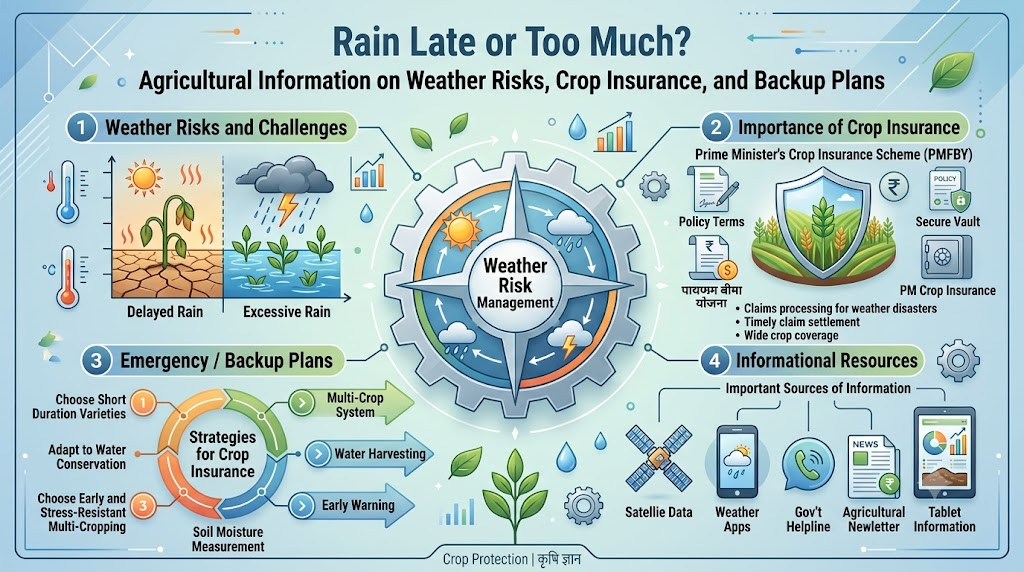
Rain decides the fate of many farms. Too little rain dries the nursery. Too much rain floods the field. A sudden storm can flatten a ripe crop in one night. Most families cannot control the weather, but they can prepare for it. Clear farming information in Hindi helps them plan before the sky turns. MAHTO is a Hindi-first rural knowledge platform. It explains agriculture, government schemes, livestock, mandi prices, weather-based farming guidance, and village business in plain words. It is not a government website. This blog shows how a family can face weather risk with calm steps. It also covers insurance, credit, crops, animals, and side income.
What Does Weather Risk Mean for a Farm?
Weather risk is the chance that rain, heat, cold, or wind harms your crop or animals. It is not one single event. Drought, flood, hail, frost, and heat waves all count. Each one hurts in a different way. A dry spell stunts growth. A flood rots roots. Hail tears leaves and grain. Knowing your area’s common risks is the first step. Ask older farmers what went wrong in past seasons. Then list those events in a notebook. This list becomes the base of your backup plan.
Why This Matters for Farmers and Villages
One bad season can undo years of saving. Seed money is lost, and loans stay unpaid. Families then sell animals or borrow from lenders at high cost. A simple plan reduces such damage. It may include insurance, a spare water source, and a second income. Early weather news also helps. A farmer who hears of heavy rain can harvest early or cover stored grain. Villages that share alerts protect more crops together. Preparation costs little compared with the loss it can prevent.
Farming Information in Hindi: Why Simple Language Helps
Weather reports use terms that confuse many readers. Words like deficit rainfall, spell, and advisory sound distant from field life. Farming information in Hindi turns them into daily speech. Deficit rainfall just means less rain than normal. An advisory is a piece of advice for farmers. Once understood, a report becomes useful. A farmer can decide whether to sow now or wait. Clear words also help when family members share alerts by phone. Still, confirm any big decision with your agriculture office.
Government Schemes for Farmers
Some government schemes for farmers help during weather loss. Crop insurance is the best known. Some states also give relief after floods or drought, based on official surveys. Others support irrigation tools or water saving methods. Programmes differ by state, and rules change. Ask your block office which ones are open for your crop. Learn the last date for enrolment, because late entry may not count. MAHTO.IN explains scheme basics, documents, and common errors in simple steps. It is a guide only. Official offices make the final decisions.
PM Kisan eKYC Explained Simply
After a bad season, steady support matters even more. If you are part of PM-Kisan, keep your PM Kisan eKYC complete. It is an online identity check that confirms who receives the scheme benefit. A pause in support during a loss year can be painful. So check your status before trouble arrives. Make sure your name, bank account, and mobile number match your papers. A common service centre can help if the online route fails. Steps may change, so follow the official portal for current steps. Never share your OTP.
Kisan Credit Card: What Farmers Should Know
Weather loss can make loan repayment hard. Know the terms of your Kisan Credit Card before the season starts. Ask the bank how it treats repayment after crop loss. Ask whether insurance links with your card. Keep ID, address proof, and land papers up to date. Borrow only what your crop needs, because a smaller loan is easier to manage after a bad year. If a loss does occur, speak to the bank early. Do not hide from the branch. Rules differ, so confirm current terms.
How to Check Mandi Prices
A weather shock often moves market rates. When many farms lose crops, supply drops and prices may rise. When storms force early harvests, arrivals may jump and rates may fall. So learn how to check mandi prices every week during risky months. Use official market portals, mandi boards, and trusted traders. Note the trend, not one day’s rate. If you can store dry grain safely, you may wait for a better offer. But storage has its own risks, like damp and pests. Plan before you decide.
How to Grow Paddy
Paddy depends heavily on water. If you plan how to grow paddy in an uncertain rain area, begin with the water source. Check canal timing, tubewell condition, and pond levels. Choose a variety that suits your local rain pattern. Ask the agriculture office about options that cope with flood or dry spells. Level the field well to avoid pooling. Keep drains clear. Watch the sky and local alerts before transplanting. If rain fails, do not panic. Ask experts about a safe change of plan.
How to Start Organic Farming
Healthy soil can handle weather stress better. If you wish to learn how to start organic farming, think of compost as a sponge. It helps soil hold water in dry spells. Mulch also cuts evaporation. Green manure crops protect bare ground from heavy rain. Use trees and hedges on field edges to slow wind. Begin on one plot and keep notes on how it handles stress. Results take seasons, and yields may dip early. Ask local experts about rules before using an organic label.
How to Start Goat Farming
Goats cope with dry conditions better than many animals. Here is how to start goat farming with weather in mind. Build a shed that keeps off rain and strong sun. Raise the floor so water drains away. Keep clean water ready in hot weeks. Store dry fodder before the rains, since green feed may be scarce later. Choose a breed suited to your climate. Start with a few animals. A local veterinarian should guide vaccines and any illness. Do not treat sick animals yourself.
Livestock Farming Information
Useful livestock farming information includes weather care. In heat, give shade, clean water, and airy sheds. In cold, protect young animals from chill with dry bedding. In heavy rain, keep floors dry to stop disease. Floods may force you to move animals, so plan a safe spot in advance. Vaccines protect against many common diseases, and your veterinarian sets the schedule. Balanced feed keeps animals strong through stress. Store fodder in a dry place. Insurance for animals exists in some areas, so ask your local office.
Village Business Ideas
A second income softens weather shocks. Village business ideas that do not depend on rain suit this need. A small stitching unit works through every season. A repair stall for pumps, bikes, or phones serves daily demand. Packing spices, pickles, or snacks may suit women’s groups. A tool rental service earns when farmers need machines. Some families sell rainwater tanks or simple water filters. Test demand with a few buyers first. Count your own work as a cost. No idea guarantees profit.
Table: Farming and Rural Income Options at a Glance
| Option | What It Involves | Who It Helps |
|---|---|---|
| Government schemes for farmers | Insurance, relief, and water-saving support | Farm families facing weather risk |
| PM Kisan eKYC | Online identity check to keep support steady | PM-Kisan beneficiaries |
| Kisan Credit Card | Bank credit with a clear repayment plan | Farmers needing seasonal funds |
| How to check mandi prices | Watching rate changes after weather shocks | Growers deciding when to sell |
| How to grow paddy | Water planning and suitable varieties | Farmers in uncertain rain areas |
| How to start organic farming | Compost and mulch for water holding | Farmers building soil strength |
| How to start goat farming | Weather-safe shed and stored fodder | Families with small space |
| Livestock farming information | Heat, cold, and flood care for animals | All animal keepers |
| Village business ideas | Repair, packing, rental, stitching | Youth, women, small groups |
Common Mistakes Farmers Make
- Ignoring weather alerts. Check them often in risky months.
- Missing the insurance enrolment date. Ask your bank or office early.
- Sowing the whole farm on one date. Spread the risk.
- Leaving PM Kisan eKYC pending. Support may pause in a loss year.
- Taking a large Kisan Credit Card loan without a backup plan. Borrow only what you need.
- Selling in panic after storms, without knowing how to check mandi prices.
- Storing wet grain. Mould can spoil the lot.
- Believing rumours about government schemes for farmers after a disaster. Verify with the office.
- Leaving animals in open fields during storms. Move them to safe shelter.
- Keeping no photos or records of damage. Proof helps in any claim.
A Simple Example
This is a fictional example. A family grows paddy and keeps a few goats. Last season, late rain delayed their sowing. This year, they plan ahead. First, they read weather guides on MAHTO.IN. Then they note which months bring the highest risk in their area. They ask the bank about insurance dates. They talk to the agriculture office about suitable seed and how to grow paddy in uncertain rain. They store dry fodder for the goats. They also think about a small repair stall for quiet months. Each step is checked with local offices.
How MAHTO Can Help
MAHTO helps families prepare before trouble comes. Its farming pages cover crops, irrigation, soil testing, fertilizer, pest control, crop calendars, and weather-based guidance. They include how to grow paddy and how to start organic farming. Scheme pages explain PM-Kisan, PM Fasal Bima Yojana, Kisan Credit Card, and Soil Health Card. They share eligibility, benefits, documents, application steps, and common mistakes. Livestock pages give livestock farming information on dairy, poultry, fish, goats, and feed. Business pages share village business ideas for many budgets. The goal is farming information in Hindi that is simple and calm. MAHTO.IN is not an official portal. It cannot promise income, subsidy, or loan approval.
Frequently Asked Questions About Weather Risk and Backup Plans
- How does farming information in Hindi help me read weather news?
It explains words like deficit rainfall and advisory in daily speech. You can then judge whether to sow, wait, or harvest early. Share it with family. Still, confirm big choices with your agriculture office, since local conditions can differ. - Which government schemes for farmers help after crop loss?
Crop insurance and state relief programmes are common examples. Rules, dates, and crops differ by state. Ask your block office and bank what applies to you. Keep photos and records of the damage. Do not pay anyone for promised approval. - Can a missing PM Kisan eKYC cause trouble after a bad season?
It may pause scheme support, which you need most in a loss year. Check your status on the official portal now. Match your name, bank account, and mobile number. Visit a common service centre if you need help. Follow current official steps. - What should I ask my bank about a Kisan Credit Card before the season?
Ask about limits, interest, repayment dates, and insurance links. Ask what happens if the crop fails. Carry ID, address proof, and land papers. Borrow only what you need. Approval is the bank’s decision and is never guaranteed. - How to check mandi prices when storms change the market?
Use official market portals, mandi boards, and trusted traders. Check rates every few days. Compare two or three markets. Note arrivals if reports show them. Decide calmly, and do not sell in panic. Remember to subtract transport costs. - How to grow paddy when rain is uncertain?
Start by checking your water source. Ask your agriculture office for suitable varieties. Level the field and keep drains clear. Watch local weather alerts before transplanting. If rain fails, ask experts about safe changes. Never guess spray or fertilizer amounts. - How to start organic farming if I worry about drought?
Compost and mulch help soil hold water. Green manure protects bare ground. Start on one small plot and keep notes. Compare it with your regular field. Expect a slow change. Ask local experts about label rules before selling as organic. - How to start goat farming in an area with harsh weather?
Build a dry shed with a raised floor and shade. Keep clean water ready in heat. Store dry fodder before the rains. Choose a breed suited to your climate. Meet a veterinarian before buying. Begin with a few animals and learn the routine. - Where can I find livestock farming information on weather care?
Ask your district veterinary office and animal husbandry department. Farm training centres also help. Plain guides such as those on MAHTO.IN can prepare your questions. Ask a veterinarian before treating any illness. Plan a safe shelter spot for floods. - Which village business ideas help when crops fail?
Repair stalls, stitching, packing, and tool rental do not depend on rain. Choose work that fits your skills and local need. Test demand first. MAHTO shares such village business ideas as simple guides. It is not a government site and cannot promise income.
Final Thoughts
You cannot control the sky, but you can prepare for it. Note your area’s common weather risks and plan around them. Ask about insurance dates early. Keep PM Kisan eKYC complete, and borrow on a Kisan Credit Card only for real needs. Know how to check mandi prices when storms shake the market. Plan water for how to grow paddy, and try how to start organic farming or how to start goat farming in small steps. Use farming information in Hindi, careful livestock farming information, and steady village business ideas as backup. Confirm government schemes for farmers on official sources. MAHTO will keep sharing simple guides for rural families.
Leave a Reply